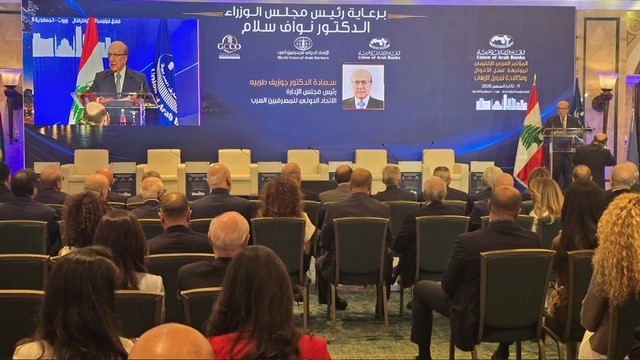
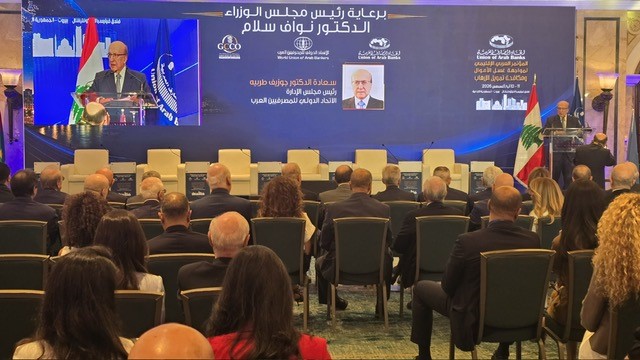
Speech by Dr. Joseph Torbey
President of the World Union of Arab Bankers
President of the Executive Committee of the Union of Arab Banks
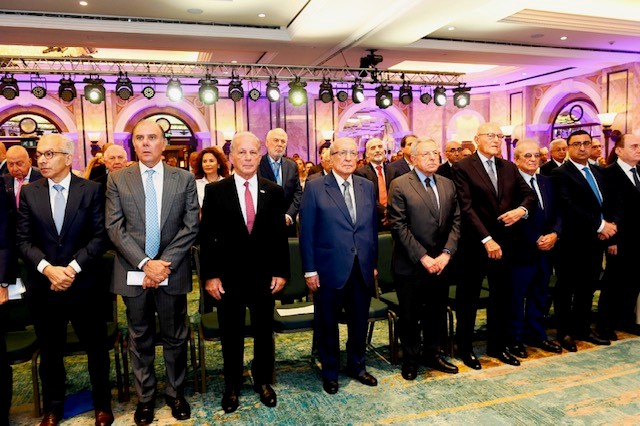
Arab Regional Conference on Combating Money Laundering and Countering the Financing of Terrorism
Phoenicia Hotel – Beirut | August 11–12, 2026
His Excellency Prime Minister Judge Nawaf Salam
Distinguished Guests
Ladies and Gentlemen
It is a great privilege to welcome all of you to Beirut
I must first extend my deep gratitude and profound appreciation to His Excellency Prime Minister Judge Nawaf Salam for his generous sponsorship of this vital summit
I would also like to thank the leadership of the Union of Arab Banks and the World Union of Arab Bankers for designating Lebanon as the host for this regional assembly during such a pivotal political and economic period
While the Middle East remains a central focus of global attention, Lebanon is actively striving to restore its historic position as an engaged Arab partner dedicated to resolving our shared challenges
Today, countering money laundering and terrorism financing transcends basic legal compliance or the mere adoption of international banking protocols. Rather, it has evolved into a critical battleground for shielding our national economies, securing the stability of our financial systems, and upholding global confidence in our sovereign nations and financial institutions
Across Lebanon and the wider Arab region, the gravity of this fight has intensified due to profound regional geopolitical and economic shifts. We are experiencing an expansion of cash intensive economies, rapidly changing money transfer methodologies, and the rise of novel financial and technological tools all of which carry the risk of exploitation by criminal and terrorist organizations
In coordination with the Middle East and North Africa Financial Action Task Force, MENAFATF, and in accordance with international protocols, Arab nations have made major strides in developing necessary legislative and institutional frameworks
However, our primary hurdle is no longer the mere existence of these laws and agencies. The true test lies in strict compliance, effective enforcement, and measurable outcomes. This core challenge forms the very baseline of our current operational phase
Furthermore, within this framework, it is entirely incorrect to view banking institutions as the origin of the threat. In reality, banks serve as our primary line of defense against illicit financial flows
They maintain a direct and essential stake in shielding their operations, protecting their shareholders and depositors, and safeguarding the broader economies in which they operate. Consequently, every resource a bank allocates to this domain is an intentional investment in its own long-term viability, market reputation, and continued integration into the global financial network
Simultaneously, no country can hope to eradicate money laundering by placing the burden entirely on its banking network
True victory requires a comprehensive national strategy capable of permeating every layer of the economy. It must fully encompass corporate entities, commercial trade, real estate markets, and every other sector vulnerable to being exploited as a channel for illicit financial transactions
Furthermore, it necessitates a highly vigilant judicial system alongside seamless collaboration with the key professional sectors that interface directly with the business community most notably notaries, legal counsel, accountants, money-transfer networks, and currency exchange bureaus
Distinguished Guests
When viewed through a regional lens, it is evident that no single Arab nation can successfully confront the menaces of money laundering and terrorist financing in isolation. We are operating within a global landscape increasingly dictated by powerful economic blocs, strategic alliances, deeply interconnected marketplaces, and sprawling international supply chains.
Capital traverses international borders with immense velocity. A single financial transaction can easily originate within one sovereign state, route through an intermediary in a second, and reach its ultimate beneficiary in a third.
Because of these dynamics, collaboration across our borders specifically among our financial intelligence units, regulatory bodies, tax administrations, security agencies, and judicial organs is no longer an optional strategy. It has become an absolute imperative
Consequently, both inter-Arab and global cooperation must be fundamentally reinforced if we are to effectively counter financial crime and preserve the structural integrity of our financial networks. This is especially vital as our region navigates some of the most severe and complex challenges it has encountered in decades
Armed conflicts have claimed countless lives, inflicted widespread devastation, paralyzed economic activity, and systematically transformed historically prosperous creditor nations into burdened debtor states
Furthermore, when evaluating the contemporary Middle East, it is clear that the confrontations fracturing our region are no longer restricted to conventional military battlefields
Instead, they are actively being waged through sophisticated economic and financial mechanisms most prominently via the imposition of sanctions
The compounding dollarization of our regional economies, paired with the subsequent vulnerability of global financing flows and correspondent banking linkages to external political and economic pressures, has introduced critical vulnerabilities for both our sovereign nations and our financial institutions
While the underlying difficulties confronting our Arab nations are fundamentally uniform, our specific institutional frameworks and technological capabilities to tackle them differ vastly from one state to another. This stark disparity renders active cooperation, strategic coordination, and the reciprocal exchange of specialized expertise more critical than ever before
We are compelled to deepen the alliance among our regulatory bodies and law enforcement agencies, ensuring the systematic exchange of proven methodologies in financial forensics, asset tracing, and the active disruption of money-laundering and terrorist-financing networks. Our respective governments are according this mission the absolute highest priority, particularly when viewed against the backdrop of rapid regional geopolitical shifts and the escalating dangers associated with international economic sanctions
For economically fragile nations especially, the imposition of sanctions can inflict a compounding and exceptionally agonizing burden
There is absolutely no doubt that economic sanctions when deployed alongside asset freezes and rigorous criminal financial investigations have transformed into incredibly potent tools capable of exerting massive advantage over sovereign states and institutions worldwide
Dominant global powers frequently deploy these mechanisms to advance specific political and strategic agendas, leveraging their structural dominance over foundational pillars of the global financial and economic architecture
Furthermore, these measures generate severe reputational hazards for targeted nations and, most acutely, for commercial banks and financial firms. In certain instances, these reputational hazards can directly imperil the very survival of financial institutions, even when such restrictive measures are enacted under the broad mandate of countering money laundering, terrorism financing, systemic corruption, or other manifestations of financial crime
Ladies and Gentlemen
As we convene today in Beirut, it is impossible to address the structural challenges before us without acknowledging, with profound sorrow, the immense adversity that Lebanon has endured over the past several years. At the absolute forefront of these trials is the ongoing financial crisis a crisis born from decades of compounding monetary and fiscal imbalances that were left unchecked without timely or decisive corrective interventions
It is vital, however, to acknowledge that Lebanon’s systemic crisis stemmed from a complex web of interconnected financial, political, and economic dynamics, rather than any singular isolated cause. Concurrently, the nation continues to weather the profound fallout of the ongoing conflict in its southern territory a theater where military, economic, and political priorities intersect alongside a dense convergence of local, regional, and international interests. These competing international interests continue to reverberate across many dimensions of Lebanon’s internal stability and foreign policy
Within this specific framework, countering money laundering and terrorist financing assumes heightened significance due to Lebanon’s delicate and highly sensitive positioning within the regional and global financial grid
Our institutional bonds with correspondent banks and global financial entities remain absolutely indispensable to the baseline functioning of the Lebanese economy. Safeguarding the continuity of these relationships demands unyielding, sustained efforts to reinforce international trust in the Lebanese banking sector
Our institutional bonds with correspondent banks and global financial entities remain indispensable to the baseline functioning of the Lebanese economy. Safeguarding the continuity of these relationships demands unyielding, sustained efforts to reinforce international trust in the Lebanese banking sector
Furthermore, Lebanon’s foreign trade encompassing both essential imports and outbound exports relies fundamentally on the structural integrity of this banking network
For instance, in 2025, Lebanon’s import expenditures reached approximately US$19 billion, whereas export revenues generated roughly US$3.3 billion
Despite the severity of Lebanon’s domestic financial crisis and its designation on the Financial Action Task Force’s grey list, Lebanese banking institutions have successfully sustained these vital commercial flows through their correspondent banking channels with remarkable efficiency. While this represents a monumental achievement, it also brings a critical responsibility that we must diligently protect
Consequently, fortifying Lebanon’s anti-money-laundering and counter-terrorist-financing infrastructure must never be viewed as a mere performative reaction to international mandates. Instead, it must be recognized as an indispensable foundation for rebuilding and securing long-term trust in Lebanon’s financial sector
Achieving this objective requires:
- Bolstering the independence and practical efficacy of relevant regulatory and judicial bodies.
- Upgrading and expanding internal compliance frameworks within commercial banks.
- Enhancing the quality, transparency, and trustworthiness of financial data.
Enforcing robust and effective ultimate beneficial ownership regulations.
And fostering deeper, seamless collaboration among all participating institutions.
Distinguished Guests
The Arab world, with Lebanon at its core, is entering a demanding new chapter in the campaign against money laundering and terrorist financing. We have progressed past the foundational phase of merely drafting legislation and establishing oversight bodies. We are now stepping into a far more rigorous arena: the era of demonstrating practical efficacy and delivering verifiable outcomes
This transition demands absolute political will. It requires resilient, unshakeable institutions. It mandates highly specialized and efficient judicial systems
It demands a modern, sophisticated banking sector equipped with advanced technological capabilities
Crucially, above all else, it necessitates meaningful and sustained inter-Arab cooperation
These are precisely the core domains that the Union of Arab Banks actively seeks to advance through its ongoing dialogues, institutional communications, strategic initiatives, and regional conferences
Ultimately, the battle against illicit capital is not the sole burden of commercial banks, nor is it the exclusive responsibility of security and judicial authorities alone. This is a collective battle to shield our economies, our sovereign states, and our societies
At its absolute core, the genuine struggle lies between an economic system anchored in transparent frameworks and rules, and a shadow economy where capital flows entirely unhindered by effective oversight
Ladies and Gentlemen
The message we convey today from the Arab world to the international financial architecture is unequivocal
We desire a secure, resilient, and robust financial system
We demand authentic international cooperation in the global fight against money laundering
However, we also insist that compliance remain firmly grounded in rule of law, objective risk assessment, and verifiable evidence rather than fear
Ultimately, the campaign against money laundering must serve as a vehicle for protecting national economies, never as a political tool for isolating them
The more successfully Arab nations transition beyond superficial compliance with international protocols and toward constructing robust frameworks capable of uncovering illicit wealth, prosecuting perpetrators, and reclaiming assets, the better positioned they will be to safeguard their sovereign economies
Consequently, they will be vastly more capable of fortifying investor confidence, enhancing the global credibility of their financial networks, and cementing the overall stability of their financial architectures
This represents the defining responsibility placed before us. It is a mandate that can only be fulfilled through unyielding cooperation, profound commitment, and a unified determination to build financial systems that are inherently secure, transparent, resilient, and globally trusted
Thank you for your kind attention